

Waste: an expensive and recurring problem
In the composites industry, reducing waste is a challenge that directly impacts competitiveness and profitability. Every kilogram of resin, fibre, or consumable thrown away represents not only an additional cost but also a loss of productive efficiency.
On top of the cost of the wasted material itself, there is another factor that weighs heavily on the producer’s budget: disposal. Chemical materials require proper treatment and correct destination, which demands time, specific processes, and additional expense.
The impact of rework
Another critical point is rework. Many times, process failures result in off-spec parts with voids, poor resin impregnation, or dimensional variations. This means that time, labour, and raw material already invested must be repeated, further increasing the cost per part produced.

In practice, what could be an efficient production line often becomes a cycle of trial and correction, draining resources that could otherwise be applied to new production and company growth.
Why does this waste happen?
Waste is not only linked to the use of disposable consumables such as vacuum bagging films, tapes, and auxiliary materials, although these do generate considerable volumes of waste in every production cycle.

Traditional processes such as conventional RTM and hand lay-up also carry their own inefficiencies. In hand lay-up, for example, operators tend to apply more resin than necessary to ensure full fibre impregnation. The result: heavier parts, excess resin without structural function, and direct material waste.
In conventional RTM, resin is often over-injected or flows into auxiliary channels where it cannot be recovered for the final part. Both methods lead to significant losses, which, when accumulated over production, represent substantial costs.
In short, whether from disposable consumables or inefficient use of resin and fibres, traditional processes still carry a high level of waste.
A shift in mindset: thinking in terms of efficiency

Looking at this scenario, it becomes clear that the challenge is not only about making parts, but about making them smarter, more efficient, and more sustainable. Reducing waste is not just an environmental concern; it is, above all, an economic one: it means spending less, making better use of resources, and increasing profit margins.
The solution: reusable silicone membranes
This is where reusable silicone membranes enter the picture as a true game-changer for the sector.
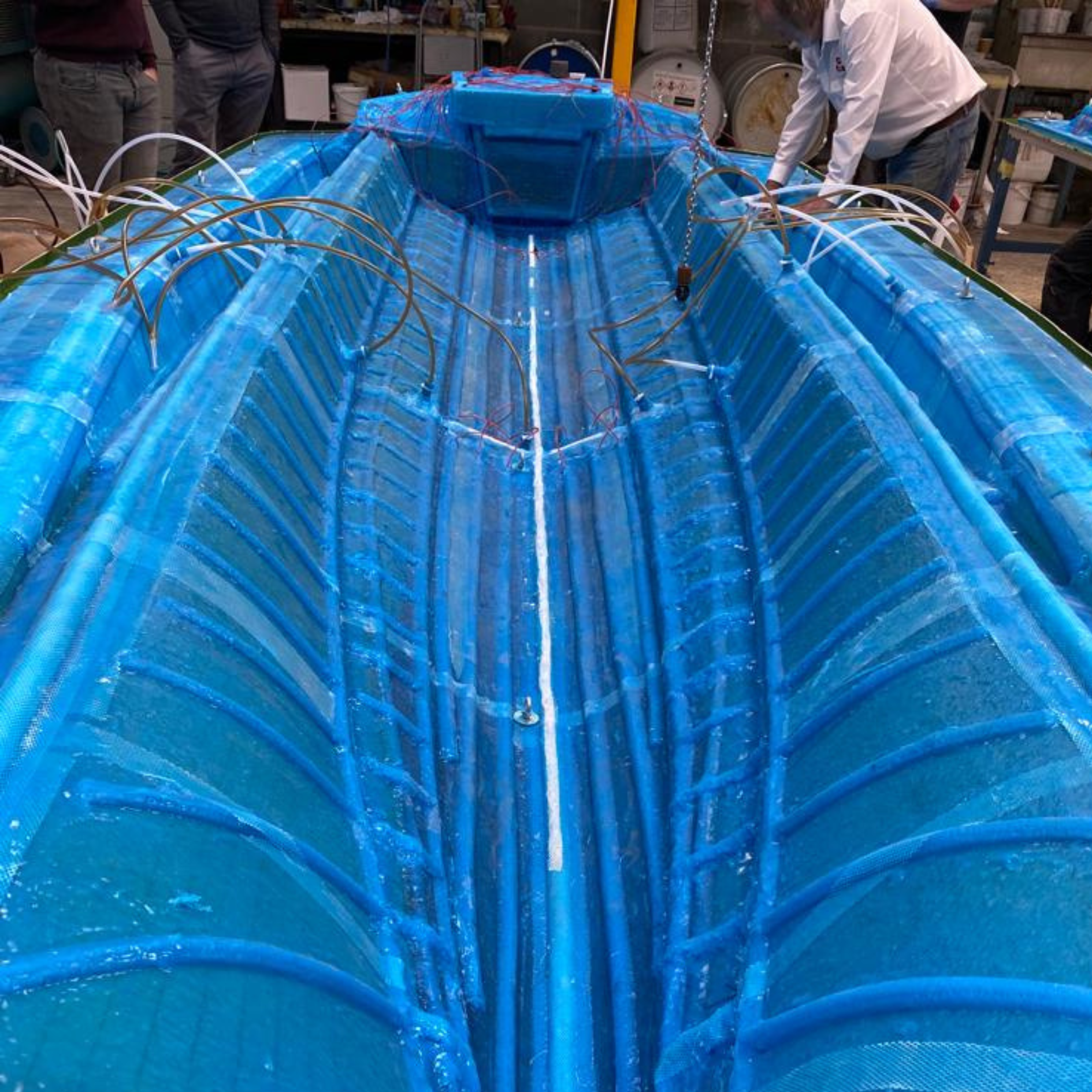
Unlike single-use consumables, the membrane can be applied repeatedly without losing efficiency. Its flexibility and sealing capacity allow uniform pressure distribution across the entire part, ensuring better compaction and consistent resin impregnation.
These features explain the benefits:
- Reduced use of disposable consumables
Because the membrane replaces single-use materials such as vacuum bagging films, removing the need to discard consumables after every cycle.
- More stable production with fewer defects
Because the membrane guarantees uniform pressure over the part surface, leading to consistent fibre impregnation and lowering the risk of defects that cause rework.

- Greater cost predictability and faster mold preparation
Because the membrane’s reusability spreads its cost across hundreds of cycles, eliminating ongoing spending on consumables and reducing financial uncertainty in each production run.
In addition, mold preparation is much quicker: while a disposable vacuum bag requires significant time and labor to be positioned and sealed correctly on every cycle, the membrane already matches the exact shape of the mold. This means fewer working hours wasted, and therefore less money lost, since operators can spend that time speeding up the production cycle or focusing on other valuable tasks.
- Practical sustainability
Because lowering the use of disposables and reducing resin excess significantly cuts down on industrial and chemical waste, aligning production efficiency with today’s environmental demands.
Conclusion
Material waste is a silent enemy in the composites industry, eroding profits and undermining competitiveness. But it is not inevitable.
Reusable silicone membranes offer a modern and effective solution to transform this scenario. With them, manufacturers can produce more, with less waste, less rework, and far greater value in every part.
Follow us on social media
Contact Us Today
Want to learn more about or Vortex Injection Valve or any other products & services? Reach out to our team today.


