The Current Landscape of Prepreg and Autoclave in the Composites Industry
Reusable silicone membranes are beginning to gain ground in a landscape where traditional processes are already well-established. Currently, the use of prepregs remains one of the most reliable solutions when the goal is to achieve high mechanical performance and rigorous quality control.
Generally, prepreg materials, fibres pre-impregnated with resin, are widely used in sectors requiring extreme precision. These include aerospace applications, high-performance automotive parts, and critical industrial components. In this context, the autoclave curing process has established itself as the standard of excellence, primarily by combining pressure and temperature in a controlled manner.
Furthermore, the autoclave allows for superior levels of compaction and low porosity. As a result, parts exhibit consistent mechanical properties and a high-quality surface finish. For this reason, many companies continue to invest in this type of process, even in the face of high operational costs.
However, although the process is technically robust, it also involves a series of manual steps and auxiliary materials. During lay-up, for example, it is necessary to apply different layers of consumables, such as peel ply, release films, and breathers. Subsequently, the entire system is sealed with a disposable vacuum bag before being placed in the autoclave.
Consequently, this workflow requires not only skilled labour but also rigorous control to avoid failures, such as vacuum leaks or compaction inconsistencies. Even with experienced teams, process variability can represent a significant challenge.
At the same time, pressure for greater production efficiency and waste reduction is growing. Companies working with advanced composites need to balance quality, cost, and sustainability, three factors that do not always go hand-in-hand in conventional methods.
This is precisely where new approaches emerge. In recent years, solutions such as reusable silicone membranes have been considered viable alternatives to optimise the process without compromising the final performance of the parts.
Therefore, before exploring these alternatives in depth, it is essential to understand how the traditional process works in detail and what its main points of attention are.
The Conventional Prepreg and Autoclave Process
Understanding the traditional workflow vs reusable silicone membranes
To appreciate the value of reusable silicone membranes, it is essential to understand how the conventional process operates within the advanced composites industry.
Generally, the traditional prepreg and autoclave workflow follows a well-defined sequence. Although highly effective, this process depends on multiple manual steps and the intensive use of consumable materials.

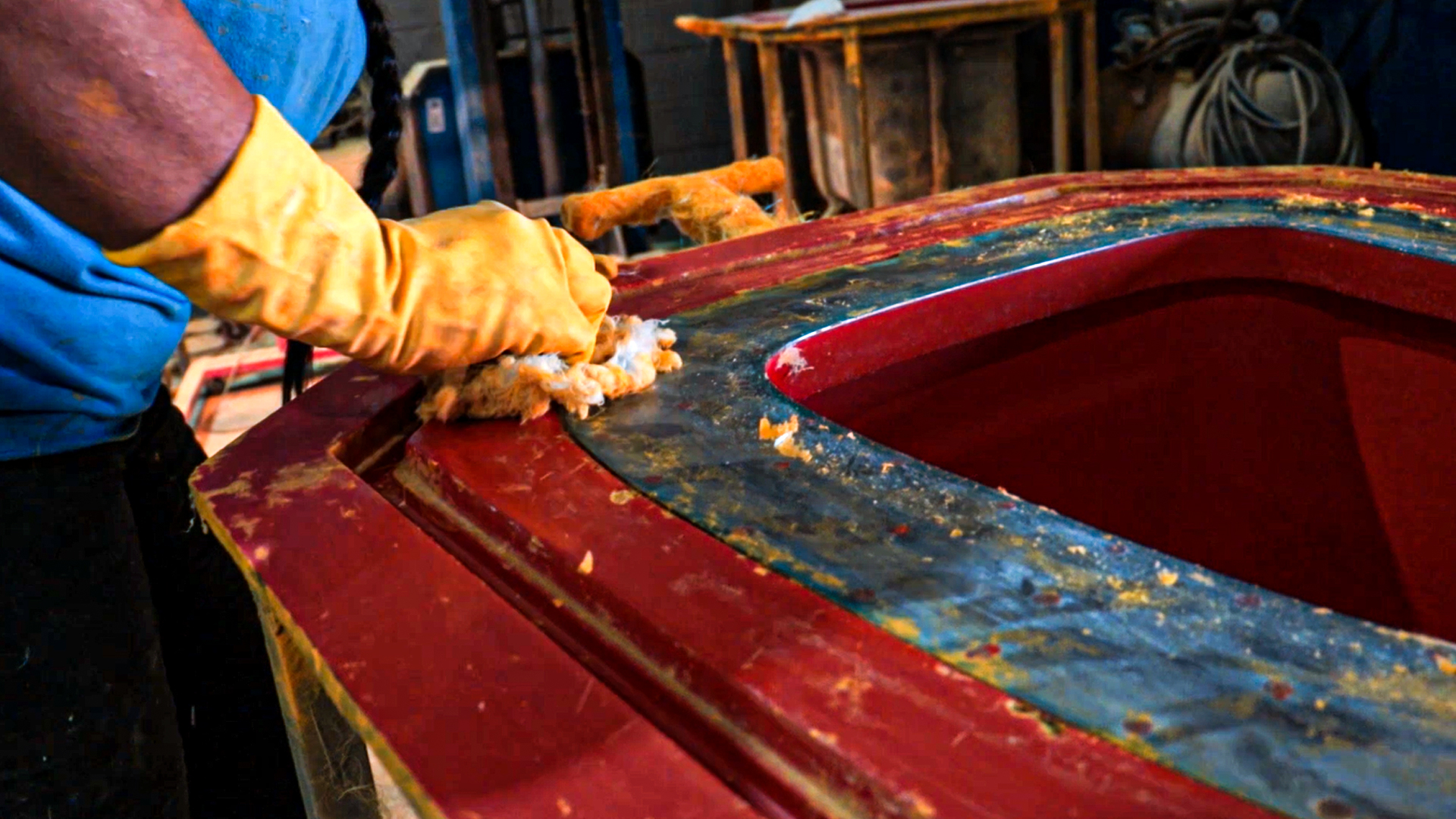
Initially, the process begins with mould preparation. This stage involves cleaning, applying release agents, and, in some cases, thermal surface control. Inadequate preparation can compromise the entire part, which requires rigorous attention from the very start.

Next, the prepreg lay-up occurs. Technicians position the material layers manually, with laser guidance, or through automated methods such as robotic tape laying, depending on the level of process sophistication. In all cases, fibre orientation, overlap, and structural sequence must be strictly controlled. At this moment, precision is critical, as any misalignment can directly impact the final mechanical performance.
Application of consumable materials
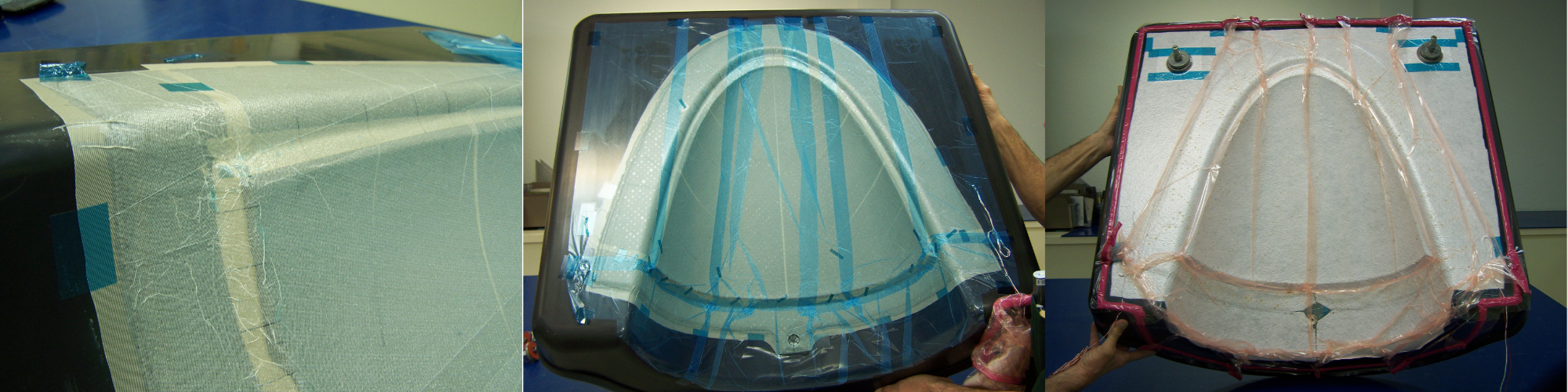
After the lay-up, the construction of the "bagging stack" begins. This stage is indispensable in the traditional process and includes several layers with specific functions. Typically, the system comprises:
Peel ply: facilitates removal and prepares the surface.
Release film: prevents unwanted adhesion.
Breather (or bleeder): allows air circulation and absorbs excess resin.
Vacuum bag: a disposable flexible film that seals the entire assembly.
Additionally, operators use sealant tapes to ensure the seal between the bag and the mould. As a result, a closed system forms, ready for vacuum application.
Debulking stages and process repetition
In many applications, particularly in high-performance or thick laminates, the process includes multiple debulking stages throughout the lay-up. These intermediate vacuum compaction steps are essential to remove entrapped air, consolidate layers, and maintain laminate quality.
However, each debulk stage often requires reopening the system and, in many cases, applying a completely new vacuum bag. This introduces additional material consumption and significantly increases labour content due to repeated bagging and de-bagging operations.
In some complex parts, it is not uncommon to have up to seven debulking stages before the final autoclave cure. Consequently, the cumulative impact on time, cost, and operator dependency becomes substantial.
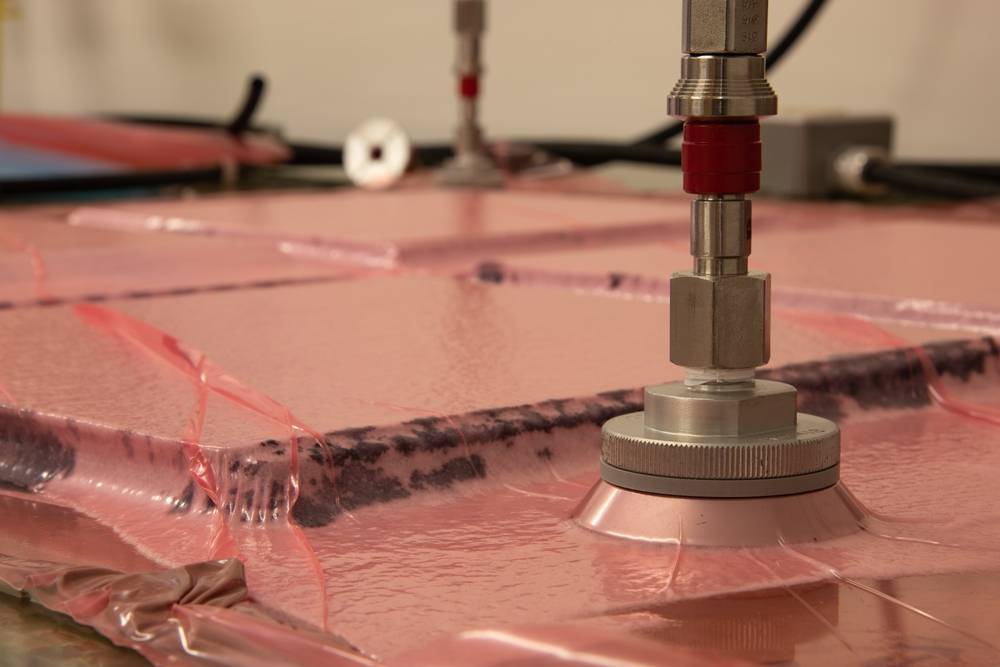
Once sealed, the system connects to the vacuum line. At this stage, verifying the seal's integrity is vital, as small leaks can compromise compaction and generate internal defects. Therefore, technicians frequently perform leak tests before curing. Nevertheless, this remains one of the most sensitive steps of the process, primarily because it relies so heavily on manual execution.

With the system validated, the part enters the autoclave. In this equipment, the simultaneous application of temperature and external pressure occurs, alongside the internal vacuum. Consequently, the autoclave has become the standard for high-performance applications, especially where certification and reliability are critical.
Cooling, demoulding, and waste
After the thermal cycle, the part undergoes controlled cooling. Subsequently, demoulding occurs, and technicians remove all auxiliary materials.
At this point, a significant drawback becomes evident: almost all consumables used throughout the process are discarded after a single cycle. In other words, for every new part produced, the entire stack must be rebuilt from scratch.
Transitioning to new approaches
While the conventional process offers exceptional technical results, it also reveals a significant dependence on disposable materials and manual labour.
For this reason, solutions like reusable silicone membranes are gaining relevance. These alternatives aim to maintain the benefits of the traditional process while significantly reducing operational complexity.
Main Limitations of the Traditional Prepreg and Autoclave Process
Where Conventional Processes Lose Efficiency Against Reusable Silicone Membranes
Although the prepreg and autoclave process is widely recognised for its reliability, its operational limitations become more evident as production scales. In this context, the discussion regarding reusable silicone membranes gains relevance precisely because it tackles critical pain points already known to the industry.
Generally, these limitations are not related to the final quality of the part. Instead, they impact efficiency, cost, and the consistency of the process as a whole.
Recurring Costs and Material Consumption
One of the primary challenges of the traditional process lies in the intensive use of consumable materials. For every production cycle, it is necessary to completely reconstruct the bagging system using peel ply, release films, breathers, and vacuum bags.
This consumption is not limited to the final cure stage. In many cases, particularly in complex or thick laminates, multiple debulking stages are required throughout the lay-up. Each of these stages may involve reopening the system and, in practice, often requires the application of a new vacuum bag and associated consumables.
As a result, material usage increases significantly beyond what is initially expected. What might appear as a single bagging operation can, in reality, become several full or partial re-bagging cycles.
Consequently, the cumulative cost is not only driven by the final cure, but also by the repeated material consumption and additional labour associated with intermediate debulking steps.
Process Variability and Manual Dependency
Another critical point is the variability introduced by manual execution. Although well-defined procedures exist, the success of the process still depends heavily on the operator’s skill.
The vacuum bag seal, for example, is a sensitive stage. Small failures can generate leaks, compromising compaction and, consequently, the integrity of the part. In addition, inconsistencies in applying consumables can result in uneven pressure distribution or resin flow. As a result, defects such as porosity or thickness variations can occur, even in controlled environments.
Setup Time and Operational Efficiency
From a production standpoint, setup time is another limiting factor. The manual bagging process requires meticulous attention to detail and can be relatively time-consuming, depending on the part’s complexity.
Meanwhile, every new production run requires the full repetition of this procedure. In other words, there is no significant efficiency gain between cycles, even with experienced teams. Besides preparation time, one must also consider rework. Leaks identified during the vacuum test, for instance, require corrections that further increase total production time.
Sustainability and Waste Generation
Finally, the issue of sustainability has gained increasing weight in industrial decisions. However, the traditional prepreg and autoclave process presents a clear challenge in this regard.
Every cycle generates a significant amount of waste due to the disposal of consumables. In continuous operations, this volume becomes relevant from both an environmental and regulatory perspective. Moreover, companies seeking to align their operations with ESG guidelines face difficulties justifying processes with high levels of waste. Therefore, even though technical performance is high, the environmental impact of the traditional process becomes a strategic factor to consider.
Introduction to Reusable Silicone Membranes
What are Reusable Silicone Membranes in the Prepreg and Autoclave Process?
In view of the limitations observed in the conventional process, alternatives have emerged to optimise operations without compromising final performance. In this context, reusable silicone membranes represent a significant evolution of the traditional bagging system used in prepreg and autoclave workflows.
Technically speaking, a silicone membrane acts as a flexible, precisely engineered three-dimensional counter-mould, designed to replace the disposable vacuum bag. Unlike conventional films, these membranes are manufactured from high-grade silicone elastomers with properties specifically tailored for advanced composite applications.
Furthermore, their geometry is customised to match the part or mould, enabling a highly controlled and repeatable fit across multiple production cycles. This dimensional conformity plays a critical role in improving process stability and reducing variability.
Replacing the Vacuum Bag and Simplifying the System
In the traditional process, the vacuum bag acts as a flexible barrier responsible for sealing the system and allowing vacuum application. However, as previously noted, it requires a series of auxiliary materials and a meticulous manual process to ensure efficiency.
With the use of reusable silicone membranes, this logic is simplified. The membrane simultaneously performs the functions of sealing and compaction, reducing the need for multiple layers of consumables. Consequently, the number of variables in the process decreases. The seal, for instance, tends to become more consistent since it no longer depends exclusively on the manual application of disposable films and sealant tapes.
Thermal Resistance and Autoclave Compatibility
A critical requirement for any material used in this process is the ability to withstand high temperature and pressure conditions. In this regard, these silicone membranes are formulated specifically to operate within autoclave environments.
These materials exhibit sufficient thermal stability to endure the curing and post-curing cycles typical of prepregs, without significant loss of mechanical properties or permanent deformation. Additionally, the elastic behaviour of the silicone allows the membrane to follow the part’s geometry during the thermal cycle, maintaining relatively uniform pressure across the entire surface. As a result, compatibility with the autoclave process is maintained without requiring structural changes to the equipment or primary curing parameters.
Improved conformity and reduction of bridging
One of the most distinctive advantages of reusable silicone membranes lies in their ability to conform accurately to complex geometries.
In traditional vacuum bagging, areas with concave features or high aspect ratios are particularly susceptible to bridging, where the bag fails to fully contact the laminate surface. This can result in voids, poor compaction, and inconsistent fibre volume fraction.
By contrast, silicone membranes can be engineered to minimise or eliminate bridging. Their elasticity, combined with precise geometric matching, ensures consistent contact even in challenging areas of the part.
Additionally, the material properties of the membrane can be locally optimised. For example, the hardness of the silicone can be adjusted, including the use of higher Shore A values (e.g. Shore A 50) in critical regions, to provide improved compaction control and dimensional accuracy.
As a result, the process becomes less dependent on operator skill, particularly in complex geometries where manual bagging techniques typically require a high level of experience.
Reuse and Operational Lifespan
Unlike traditional consumable materials, silicone membranes are designed for multiple use cycles. Depending on the application, part geometry, and process conditions, their lifespan can reach 800+ cycles.
This factor significantly alters the production dynamic. Instead of reconstructing the bagging system for every new part, the same membrane can be repositioned and reused, maintaining a consistent standard between cycles. However, it is important to consider that durability is directly related to operational control. Extreme conditions, improper handling, or highly complex geometries can influence the material’s lifespan. Nevertheless, when correctly applied, reusable silicone membranes offer a technically robust alternative to the disposable model.
An Evolution of the Process, not a Disruption
In summary, the introduction of silicone membranes does not represent a radical shift in the prepreg and autoclave process, but rather an evolution in how compaction and sealing are executed. The lay-up, thermal cycles, and physical fundamentals remain essentially the same. What changes is the operational efficiency, the repeatability, and the reliance on disposable materials.
Thus, this technology positions itself as a natural adaptation for companies, such as those partnering with Alan Harper Composites, looking to improve their processes while maintaining a consolidated technical foundation.
The Silicone, Prepreg, and Autoclave Process
How the process works with reusable silicone membranes in a prepreg and autoclave setup
Once you understand the mechanics and limitations of the traditional method, it becomes clear how reusable silicone membranes integrate into the existing workflow. Generally, the production flow remains quite similar. However, the primary difference lies in the simplification of the sealing and compaction system, which reduces steps and enhances repeatability.
Step-by-step Process with Silicone Membranes
- Mould preparation Just as in the conventional process, everything begins with mould preparation. Cleaning, applying release agents, and surface inspection remain fundamental steps. Consequently, there are no structural changes in this phase, which facilitates the adoption of the technology.
- Prepreg lay-up Subsequently, the prepreg lay-up is performed in the same manner. Technicians position the layers according to the design, respecting fibre orientation, overlaps, and structural requirements. Therefore, all existing technical knowledge regarding prepreg lamination remains valid.
- Positioning the reusable silicone membrane After the lay-up, one of the main changes in the process occurs: positioning the silicone membrane. Unlike the traditional method, it is not necessary to build a complex stack of consumables. The membrane is applied directly over the laminate, acting as a flexible counter-mould. Moreover, as it possesses a defined geometry, its positioning tends to be faster and more consistent between cycles.
- Simplified and more repeatable sealing The sealing stage also undergoes significant simplification. Instead of relying on disposable films and sealant tapes applied manually, the seal with the membrane tends to be more controlled. As a result, process variability decreases, and repeatability increases, especially in serial production environments. Consequently, the risk of failures such as vacuum leaks is reduced.
- Vacuum application With the system positioned and sealed, the vacuum is applied in the same way as in the conventional process. At this point, the physical principle does not change. However, the stability of the seal contributes to a more consistent maintenance of vacuum levels throughout the cycle.
- Autoclave curing The part then proceeds to the autoclave, where temperature and pressure are applied according to the cycle defined for the specific prepreg. It is important to note that there is no need to alter fundamental process parameters. The compatibility of reusable silicone membranes with autoclave environments allows for the maintenance of standard curing protocols.
- Removal and reuse of the membrane Following the thermal cycle and cooling, the membrane is removed from the part. In contrast to the traditional process, there is no immediate disposal of the sealing system. The same membrane can be reused in subsequent cycles, provided proper conditions of use and material integrity are maintained.
Increasing Process Repeatability
Another relevant gain is repeatability. Since the membrane has a defined geometry and predictable behaviour, variability between cycles is significantly reduced. In this way, the process becomes more stable, especially when compared to manual bagging, which can vary according to the operator and application conditions.
A Practical Adaptation of the Existing Process
In summary, using reusable silicone membranes with prepreg and autoclave does not require a reinvention of the process, but rather an intelligent adaptation of a critical stage. The workflow remains familiar, while the setup becomes simpler, leaner, and more repeatable.
Technical Comparison Between Processes
Reusable Silicone Membranes with Prepreg and Autoclave vs the Traditional Process
After analysing both workflows separately, a direct comparison between the conventional method and the use of reusable silicone membranes allows for a more objective evaluation. At this stage, the discussion moves from the conceptual to the practical, focusing on the real impacts within the operation.
Material Consumption: Disposable vs Reusable
In the traditional process, material consumption is recurring and inevitable. For every cycle, the entire bagging system must be reconstructed using new consumables.
In contrast, using silicone membranes eliminates the majority of these materials. As the membrane is reusable, consumption per part tends to drop drastically over time. Consequently, the difference lies not just in the quantity of material used, but in the logic of the process: moving from a disposable model to a reusable one.
Repeatability: Manual Execution vs Standardised System
Repeatability is a critical factor in any industrial process. However, traditional bagging depends heavily on manual execution, which naturally introduces variability. Even with experienced operators, minor differences in film application, sealing, and positioning can occur.
In contrast, reusable silicone membranes offer a more standardised system. Because the geometry of the membrane is fixed, the process tends to repeat with greater consistency. Thus, variability between cycles is reduced, which directly impacts process reliability.
Part Quality: Compaction, Finish, and Control
From a final quality perspective, both processes can achieve high performance when executed well. However, the way this quality is reached differs.
In the traditional method, compaction depends on the integrity of the vacuum bag and the correct application of consumables. Any failure can compromise the result. With silicone membranes, pressure tends to be distributed more uniformly, thanks to the elastic behaviour of the material. In addition:
- Compaction: More consistent across the entire part.
- Surface finish: Lower risk of marks associated with consumables.
- Thickness control: Greater predictability between cycles.
Setup Time: Complexity vs Agility
The time required to prepare a part is directly linked to productivity. In the traditional process, bagging is a detailed and relatively slow stage. Each layer must be applied manually, increasing preparation time and the reliance on skilled labour.
On the other hand, using membranes significantly simplifies this stage. Positioning the membrane replaces multiple operations, reducing the total setup time. As a result, the process becomes more agile and predictable, especially in repetitive production runs.
Total Cost of Ownership (TCO): Beyond the Material
A superficial analysis might focus only on the cost of materials. However, a precise evaluation must consider the Total Cost of Ownership (TCO). In the traditional process, one must sum:
- Continuous consumption of consumables.
- High setup times.
- Intensive labour requirements.
- Potential rework.
Conversely, reusable silicone membranes introduce a higher initial cost, which is then diluted over many cycles. Thus, when considering the full production cycle, the cost per part tends to be more competitive, especially in medium to high volumes.
Sustainability: Waste per Cycle
Waste generation is an increasingly relevant point. In the traditional model, each cycle results in the disposal of multiple materials. Over time, this volume becomes significant from both an environmental and economic standpoint.
Alternatively, using reusable membranes drastically reduces the waste per part. Although some auxiliary materials may still be required in certain applications, the total volume of waste is substantially lower. Consequently, the process aligns better with sustainability initiatives and ESG guidelines.
Conclusion: A Strategic Evolution in the use of Prepreg and Autoclave
Reusable Silicone Membranes as the Path to Efficiency and Scale
Throughout this article, we have analysed the traditional prepreg and autoclave process, its operational limitations, and, most importantly, how reusable silicone membranes serve as a practical evolution within this context.
Clearly, this technology does not propose a complete break from existing methods. On the contrary, it maintains well-established foundations, such as lay-up, vacuum use, and autoclave curing, while optimising one of the most critical stages: the sealing and compaction system.
Process Evolution, Not Replacement
It is important to highlight that the traditional process remains technically valid and widely used. However, as demands for efficiency increase, opportunities for improvement arise that cannot be ignored.
In this sense, reusable silicone membranes represent an intelligent adaptation. Rather than completely replacing the existing method, they refine its execution, making it more efficient, more repeatable, and significantly less dependent on manual variability.
Direct Impact on Operational Efficiency
The gains observed throughout the previous sections converge on one central point: operational efficiency.
The reduction, and in many cases, the complete elimination of consumable materials transforms the workflow. Advanced membrane systems are now capable of replacing not only the vacuum bag, but also auxiliary materials such as surface breathers (e.g. REBREATHER-type solutions), consolidating multiple functions into a single reusable component.
Additionally, process setup becomes substantially faster. What traditionally requires a full bagging operation can be reduced to a rapid sealing step completed in seconds, drastically lowering labour input and preparation time.
Another critical improvement lies in process reliability. With a pre-engineered and repeatable sealing system, the need for time-consuming drop vacuum (leak) testing is significantly reduced or eliminated, removing one of the most operator-sensitive steps of the conventional process.
Integrated Process Control and Consistency
Reusable silicone membranes also enable a higher level of process integration. Features such as built-in thermocouple points with resealable silicone inserts allow for accurate and repeatable temperature monitoring without compromising vacuum integrity.
This level of integration enhances process control while simplifying instrumentation, contributing to more consistent curing cycles and improved quality assurance.
Sustainability and Cost Reduction as Drivers
Another decisive factor is alignment with global industrial trends. Waste reduction and more efficient use of materials position reusable silicone membranes as a solution aligned with modern sustainability requirements.
At the same time, Total Cost of Ownership (TCO) analysis demonstrates that reducing disposable materials, labour time, and process variability generates significant economic advantages over the medium and long term.
Efficiency and sustainability, therefore, are no longer competing priorities, they become mutually reinforcing outcomes.
A Natural Trend in the Composites Industry
As the composites industry continues to evolve, the demand for leaner, more predictable, and scalable manufacturing processes will only intensify.
In this context, technologies that preserve the proven foundations of prepreg and autoclave processing, while eliminating structural inefficiencies such as consumable dependency, manual variability, and time-intensive setup, represent a natural direction for the industry.
Reusable silicone membranes are not simply an incremental improvement, but a strategic step toward industrialisation and process maturity in advanced composites manufacturing.
Contact Us Today
Want to learn more about or Vortex Injection Valve or any other products & services? Reach out to our team today.


